Showing posts with label China. Show all posts

Saturday, May 11, 2013

Sago, An Ancient Chinese Starch, Endures In Asian Cooking

Pearls made from sago starch are common ingredients in Asian desserts and savories. Enlarge image i

Pearls made from sago starch are common ingredients in Asian desserts and savories.
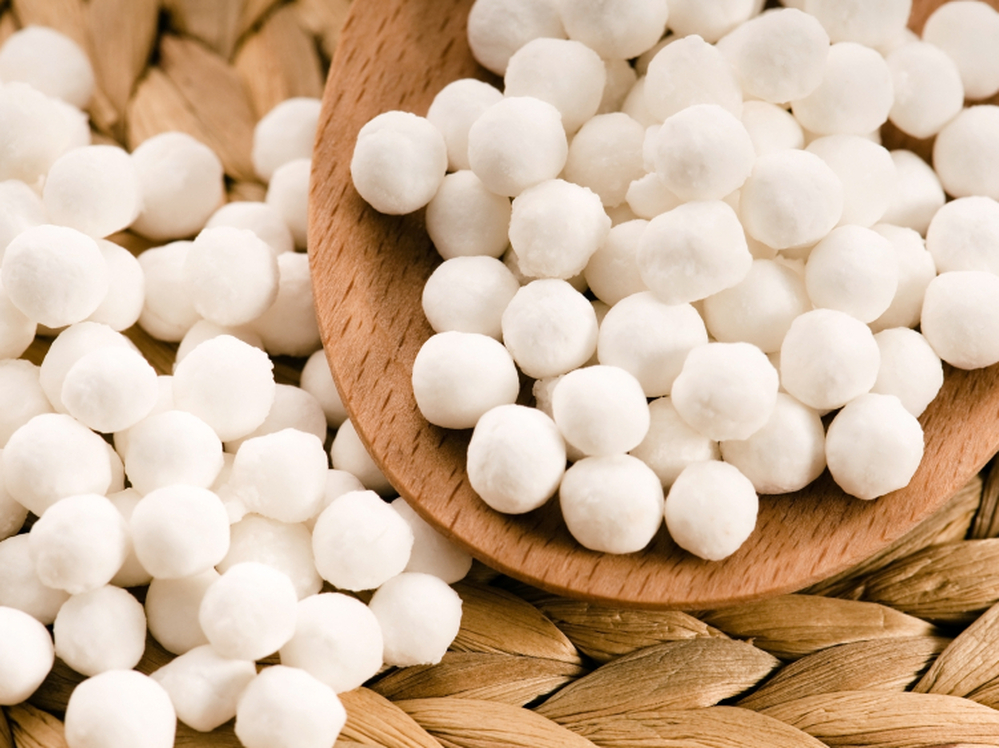
Pearls made from sago starch are common ingredients in Asian desserts and savories.

Pearls made from sago starch are common ingredients in Asian desserts and savories.

Long before rice became the mainstay of Asia, prehistoric people in China turned to sago palm for starch.

Chinese researchers reported this week in the online journal PLOS ONE that they had found traces of sago palm starch on stone implements excavated on the southern coast of China. The tools were used to prepare food about 5,000 years ago (back around when farmers in the region were also growing soy). They speculate that because people in this area had abundant supplies of sago, it took them longer to switch to rice as a staple crop.

That news tidbit from archeologists in China got us to wondering who's eating sago these days. A lot of people, it turns out.

Sago, which is made from the interior of sago palm trees, may no longer be subsistence fare for China, but it's still relied on a a staple source of carbohydrates in some parts of Papua New Guinea.

Sago also gives that gelatinous special something to desserts and savory dishes throughout South Asia.

Sago wraps pork in this Thai disk, kanom sago. Enlarge image i
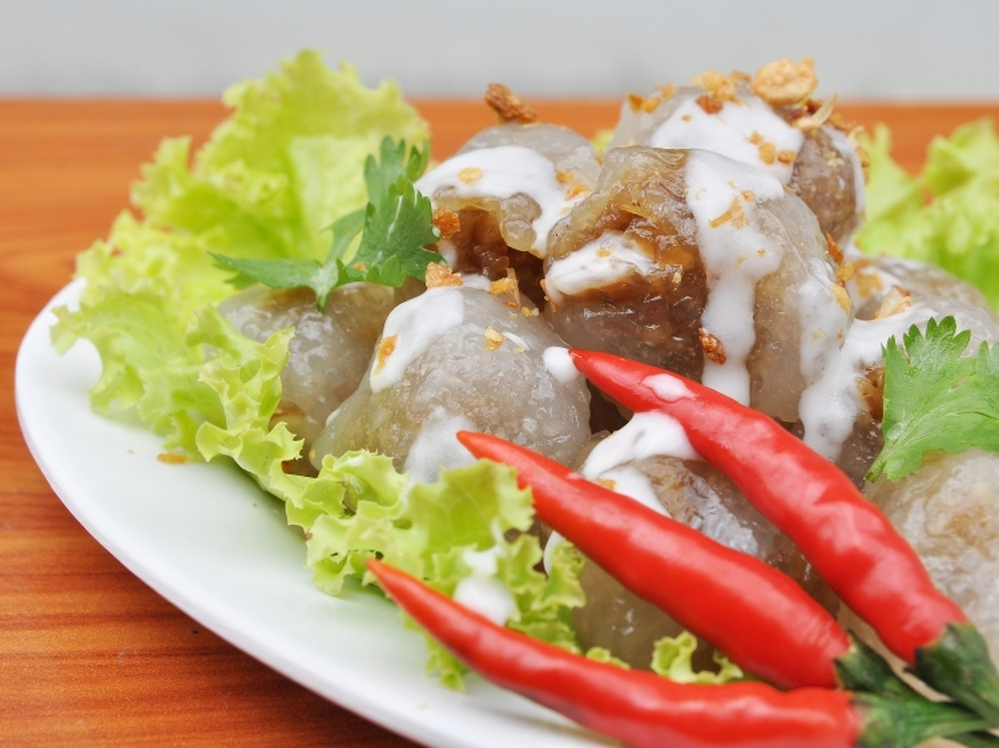
Sago wraps pork in this Thai disk, kanom sago.

Sago wraps pork in this Thai disk, kanom sago.

Sago wraps pork in this Thai disk, kanom sago.

The starch is often processed into pearl-like orbs, and those orbs often end up in soupy desserts, like the Chinese sai mai lo, with taro root and coconut milk. The Malaysian version, which is sweetened with palm sugar, sounds like a much more delicious version of the tapioca pudding I ate as a child.

That's not surprising, since tapioca, which is made from cassava root, and sago are both bland and starchy.

But the two starches will cook up a bit differently, as Australian chef Kurma Dasa reports in his recipe sabudana khichari. There, the sago stands in for grains that are avoided on Hindu fasting days.

Then there are Papuan sweet sago dumplings, which involve mashing the sago with bananas, wrapping the dough in leaves, and boiling them.

Thailand brings us pork dumplings wrapped in translucent sago dough.

And in some areas of Malaysia and Papua New Guinea, people still rely on sago as a source of carbohydrates, preparing it as a fermented paste.

Where can you find sago in the U.S.? Thanks to immigrants who've demanded a taste of home, it is available in many Asian stores. You can also find it for sale in bulk on Amazon.


cook: Definition, Synonyms from Answers.com cook v. , cooked , cooking , cooks . v.tr. To prepare (food) for eating by applying heat. To prepare or treat by heating: slowly cooked the medicinal a stub We would like to show you a description here, but the site youre looking at won't allow us. Malaysian cuisine - Wikipedia, the free encyclopedia Malaysian cuisine is influenced by various cultures from all around the world. Malaysia's population is made up mainly of 3 main ethnics - Malays, Chinese and Indians ... The Food Timeline: popular American decade foods, menus, products ... Need to plan a "decade" food event? This is a very doable project. Once you figure out what you want to accomplish, the rest will fall in place. Grab Your Fork: A Sydney food blog restaurant reviews recipes ... Restaurant reviews, food photos, recipes and cooking from Sydney, Australia and travel around the world. - Pittsburgh Post-Gazette Vokoun stops Islanders cold, Penguins win, 4-0, to take series lead Allegheny County controller to audit agency that handles emergencies at Western Psych Pirates lose ... Can someone please provide me with an example of a well-written ... Best Answer: hmmm... i don't know any good sites, but i can post one of my research papers. i'm a pretty decent writer and i got an a for it, so here you ... Cassava - Wikipedia, the free encyclopedia Cassava (Manihot esculenta), also called manioc, yuca, balinghoy, mogo, mandioca, kamoteng kahoy, and manioc root, a woody shrub of the Euphorbiaceae (spurge family ... Manyaman, Malinamnam, Mabsi,...Yummy Growing up in the province where the space for garden is so wide compared in the city where most people are crowded and there's not much space to build a house much ... Ultralingua Online Language Resources - Dictionary Grammar ... We would like to show you a description here, but the site youre looking at won't allow us.

Friday, February 8, 2013

Chinese New Yr : Dumplings, Rice Cakes And Lengthy Existence

Year cakes made of sticky rice are among the traditional Chinese New Year foods.

Year cakes manufactured of sticky rice are amongst the conventional Chinese New Yr food items.

About 3,000 many years ago, give or take a couple of decades, the Chinese men and women began celebrating the beginning of their calendar year with a joyful festival they identified as Lunar New 12 months. They cleaned their houses, welcomed relatives, bought or created new clothing and set off firecrackers. And there was feasting and exclusive offerings produced to the Kitchen God for about two weeks.

While you'd be tough -pressed to find a two-week- lengthy celebration anywhere these days, most families in China and in Chinese communities all through the globe take a few days off when the vacation begins, 1 month after the Winter Solstice. This 12 months the 12 months of the Snake it begins with a large feast on New Year's Eve, Feb. 9. Then in a lot of homes, after the feast is cleared, the total loved ones gathers to make dumplings late into the evening.

There are several special meals of the New Year, says E.N. Anderson, anthropology professor emeritus at the University of California, Riverside, and writer of The Meals of China, a guide about historic Chinese government food policies.

Extended noodles are standard, and they symbolize lengthy daily life. 12 months cakes glutinous rice formed into shapes are also a tradition. Peaches and peach blossoms signal fertility, he says, but one of the most significant items to consist of is foods, clothing and decorations that are red. Red paper decorations line the streets, and red packets of money are given to children on New Year's.

"Red is the colour of blood and for that reason life, well being and strength the colour of all great issues in China," says Anderson. So citrus fruits like tangerines the redder the better are popular, as very well as dried fruits and seeds.

Historically, the new 12 months was the one time of year when the Chinese would consume sweets, although in recent decades, they've adopted a much more Western eating plan the rest of the 12 months, he says, which include, unfortunately, our penchant for sugar.

And then there are the dumplings historically these have been manufactured in houses in northern China, but now they've spread all around the planet. They are shaped like crescents or spheres, pan-fried (kuo tieh) or boiled (jiaozi). They resemble ancient Chinese money, are stuffed with humble components like pork and cabbage, and are mentioned to bring fortune to the family.

The entire relatives gathers to chat and make the dumplings, which are eaten between midnight and two a.m., says Grace Young, author of Stir-Frying to the Sky's Edge, a guide of Chinese recipes and stories, and the Chinese meals lore guide The Breath of a Wok.

" There is also a custom to location a candied chestnut in a dumpling served to newlyweds," she says. "If the newlyweds get the dumpling, it indicates they will be blessed with a male kid."

In The Breath of a Wok, Lijun Wang, Chinese-American author Amy Tan's sister, shares her dumpling- generating recollections :

" 'As the jiao-zi boiled it was important not to eliminate the lid as well soon,' says Lijun. 'If you did, it could indicate that you'd eliminate your fortune in the coming yr. At times we would place a coin inside one dumpling for luck. On New Year's morning, it was customary not to cook but we had been generally satisfied to eat leftover warmed jiao-zi,' recalls Lijun fondly."

And historically, says Anderson, it just made sense to make dumplings when you wanted a little celebration but did not have a good deal of dollars or meals. "In northern China, foods was fairly scarce, especially this late in the winter. You are down to what little meat and flour you've acquired left. You stretch the meat as far as possible," Anderson says.

So why the Chinese new year obsession with wealth, lengthy lifestyle and fertility?

" Don't forget, you are dealing with a spot the place right up until really, very not long ago, starvation was the primary trigger of death. Getting wealth, fertility and extended existence was what they wanted," Anderson says.

But genuinely, never we all want that?

Want to give dumplings a go? Consider NPR contributor T. Susan Chang's recipes.


Chinese New Year - Wikipedia, the free encyclopedia Chinese New Year is the most important of the Chinese holidays. In China, it is also known as the ' Spring Festival', the literal translation of the modern Chinese ... Have Your Cake and Eat It Too It's in the air, and this post is dedicated to all my friends who carry within them new life. (no, tapeworm and bacteria do not count as new life). Food & Drink - How To Information eHow.com Food & Drink: Don't let that next party be a flop. Be the envy of your friends thanks to eHow's entertaining secrets sure to make that next affair a success. Food is ... picture CHINESE FOOD: cuisine culture festival Posts about picture written by passionstay ... Those ducks are one of the China most famous food ! Last summer I went to Beijing together with my father .We enjoyed ... Recipes - How To Information eHow.com Recipes: Wondering whats for breakfast, lunch, or dinner? Need a side dish or appetizer to serve with your favorite recipe? Find healthy recipes, cooking tips and ... China - Wikipedia, the free encyclopedia China (i / t a n /; Chinese: ; pinyin: Zhnggu; see also Names of China), officially the People's Republic of China (PRC), is a country in East Asia. Happy New Year 2013 Best Wishes and Happy New Year 2013 New Year 2013 is coming, every people all over the world is eager for a happy and prosperous New Year 2013. This time, i will give you some more information on New ... Nasi Lemak Lover: Pandan Huat Kueh (Chinese steamed cake) Last time my mother taught me to make Brown sugar Huat Kueh ( Chinese steamed cake) using yeast method. But this time i try this method using self-raising ...